
Shallow Water Anchors on the Flats: When They Help and When They Don't
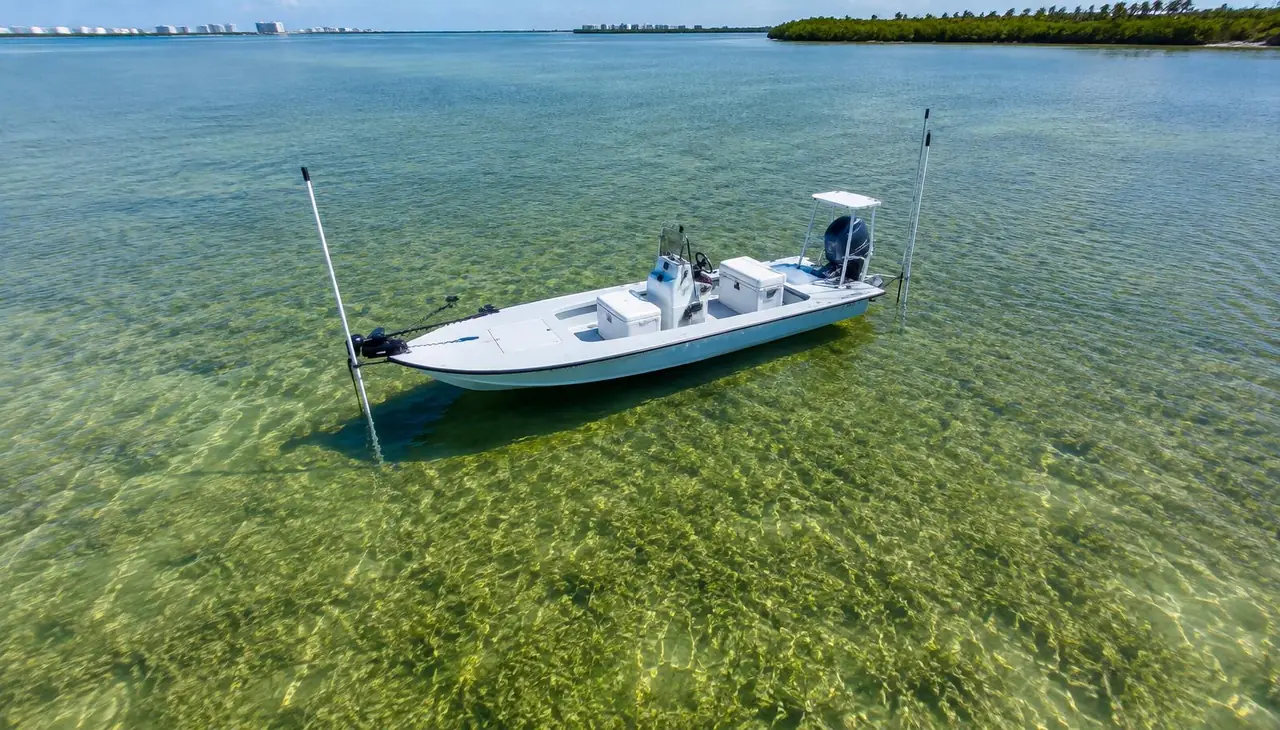
The grass flats and sandbars around Sarasota offer some of the best shallow water fishing in the region, and a shallow water anchor, often called a stake out pole or power pole style system, has become a popular way to hold position without the noise or effort of a traditional anchor. These systems work very well in the right conditions, but they are not a universal solution for every spot you might fish.
How Shallow Water Anchors Work
Rather than relying on an anchor dropped to the bottom and held by rode, a shallow water anchor drives a pole or spike directly into the bottom to hold the boat in place. This allows for quick, quiet deployment and retrieval compared to a traditional anchor, which is part of why they have become popular among anglers working the flats around Sarasota Bay.
Depth Limits Matter
Every shallow water anchor system has a maximum effective depth based on the length of its pole, and trying to use one beyond that depth simply will not hold the boat the way it is designed to. Before relying on one in a new spot, know your system's depth range and confirm the water you are fishing falls within it. Checking depth with your electronics before deploying the anchor saves time and frustration compared to discovering the limit the hard way.
- Know your anchor system's maximum effective depth before relying on it
- Check depth on your electronics before deploying in an unfamiliar area
- Keep a backup anchor option aboard for water deeper than your system's range
Bottom Type Changes Everything
A shallow water anchor holds very differently depending on what is underneath the boat. Soft mud or sand generally allows the pole to penetrate and hold well, while hard sand, rock, or heavy shell bottom can make it difficult for the pole to set at all. Thick grass can also affect how securely the anchor holds depending on root density. Paying attention to bottom composition in a given spot, which many chartplotters and local knowledge can help with, sets realistic expectations for how well the anchor will perform there.
Wind and Current Still Matter
Even a well set shallow water anchor has limits when wind or current picks up. These systems are generally designed for calmer conditions and lighter loads rather than holding a boat steady against strong current or significant wind and chop. On breezier days common around Sarasota Bay, especially ahead of afternoon storms, it is worth reassessing whether your anchor system alone is holding the boat securely or whether conditions call for additional measures.
One Anchor or Two
Some boats are set up with a single shallow water anchor at the stern, while others add a second at the bow for more complete control over how the boat sits, particularly useful for staying positioned over a specific piece of structure or keeping the boat angled a certain way for casting. Whether a second anchor makes sense depends on your typical fishing style and how often precise positioning matters for the way you fish.
- A single stern mounted anchor works well for many general fishing situations
- A second bow mounted anchor adds more control over boat positioning and angle
- Consider your typical fishing style when deciding if a second unit is worthwhile
Protecting Seagrass
Seagrass beds around Sarasota Bay support the fishery that makes this area worth fishing in the first place, and how and where you deploy a shallow water anchor can affect that habitat. Being mindful of repeatedly anchoring in the same dense grass spot, and considering sandy patches or the edges of grass beds when available, is a small habit that supports healthier flats over the long run.
When to Call a Professional
If your anchor system is not deploying, retracting, or holding the way it used to, the issue could be mechanical, electrical, or related to how it was originally installed and positioned on your transom. A technician can check the mounting, wiring, and mechanical function to determine what is behind the problem rather than guessing at a fix.
If you are considering adding a shallow water anchor system to your boat or need an existing one looked at, call M3 Mobile Marine at (941) 720-9558.
Related serviceAnchor System Installation