
How to Flush Your Outboard After Every Saltwater Trip
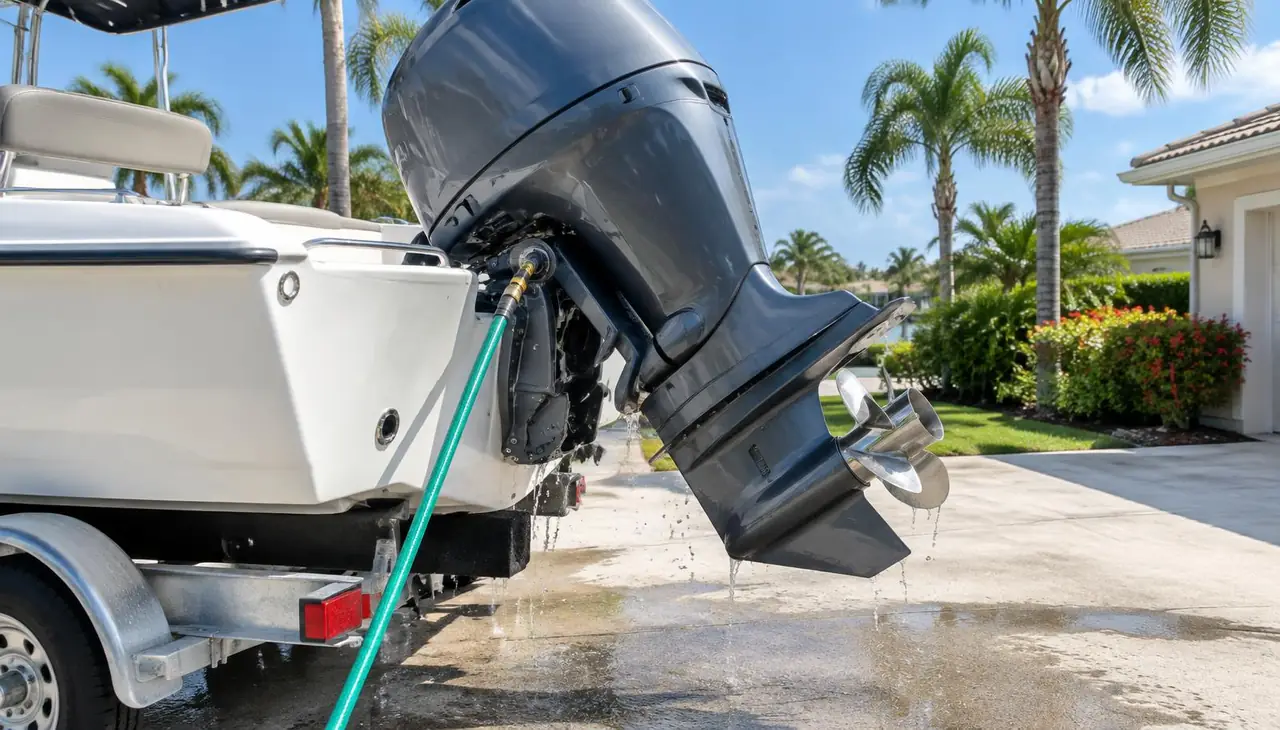
Running your boat on the salt water around Sarasota and Bradenton is part of what makes living here great, but that same salt water works against your outboard the moment you shut the engine off. Salt left inside the cooling passages and on the powerhead does not just sit there quietly, it continues to work on metal surfaces and can lead to buildup inside passages that are supposed to stay clear. A quick flush after every trip is one of the simplest habits that pays off over the life of the engine.
Flush Port vs Flush Muffs
Most modern outboards have a built in flush port, often a simple fitting on the engine cowling where a garden hose connects directly. This method flushes the internal cooling passages without needing the engine to run in gear or without muffs clamped over the lower unit. Flush muffs are the rubber cups that clamp over the water intakes on the lower unit, used with a garden hose while the engine runs. Both methods work, but check your owner's manual, since not every engine design is intended to be run on muffs without water also covering the lower unit properly, and running dry even briefly can damage the water pump.
- Use the built in flush port when your engine has one, following the manual's instructions
- If using flush muffs, make sure they fully cover the water intakes before starting the engine
- Never run the engine dry, even for a few seconds, while flushing
How Long to Flush
A flush does not need to be long to be effective, but it does need to run long enough for fresh water to fully move through the cooling passages. Many owners run the flush for several minutes, watching the telltale stream the entire time to confirm water is circulating consistently. Cutting the flush short before the system has had a chance to clear the salt water out reduces how much benefit you get from doing it at all.
Watch the Telltale
The telltale is the small stream of water that exits the engine, usually near the back, confirming that the water pump is pulling water through properly. During a flush, that stream should run steady the entire time. If it slows, sputters, or stops, that is worth paying attention to, since it can point toward a clogged passage or a water pump issue rather than just a connection problem with the hose.
Rinse the Powerhead and Lower Unit Too
Flushing the internal cooling system is only part of the job. Salt spray also settles on the outside of the engine, including the powerhead under the cowling and the lower unit. After the internal flush, a light rinse with fresh water on the exterior surfaces, avoiding electrical connections and the air intake, helps keep salt from accumulating on fittings, clamps, and painted surfaces over time.
- Rinse exterior surfaces with fresh water after the internal flush is complete
- Avoid spraying directly into electrical connections or the air intake
- Wipe down the cowling and dry fittings when possible to limit lingering moisture
Salt Removing Products
There are marine cleaning products on the market designed to help loosen and remove salt residue from engine surfaces as part of a regular rinse routine. These generally work alongside a normal fresh water flush rather than replacing it, applied to exterior surfaces to help break down the fine salt film that plain water alone may not fully remove. Follow the product's instructions regarding engine surfaces and avoid contact with electrical components.
What Happens When You Skip It
Skipping flushes now and then will not sink your trip, but it adds up. Salt residue left inside cooling passages can accumulate over repeated trips, gradually restricting water flow that the engine depends on to stay at a safe operating temperature. On the outside, skipped rinses allow salt to build on fittings and connections, which can accelerate corrosion in a hot, humid climate like ours. An engine that is flushed consistently after every saltwater outing tends to show far less of this buildup over time than one that only gets rinsed occasionally.
When to Call a Mechanic
If you notice a weak or inconsistent telltale stream even after confirming your flush setup is correct, or you notice the engine running warmer than usual, it is worth having the cooling system checked rather than waiting. Corrosion on fittings or connections that looks beyond simple surface buildup is also worth a professional look before it spreads further.
If your flush routine is not keeping up, or you want a cooling system check before it becomes a bigger issue, call M3 Mobile Marine at (941) 720-9558.
Related serviceOutboard Hour Services