
Making Boat Batteries Last in Florida Heat
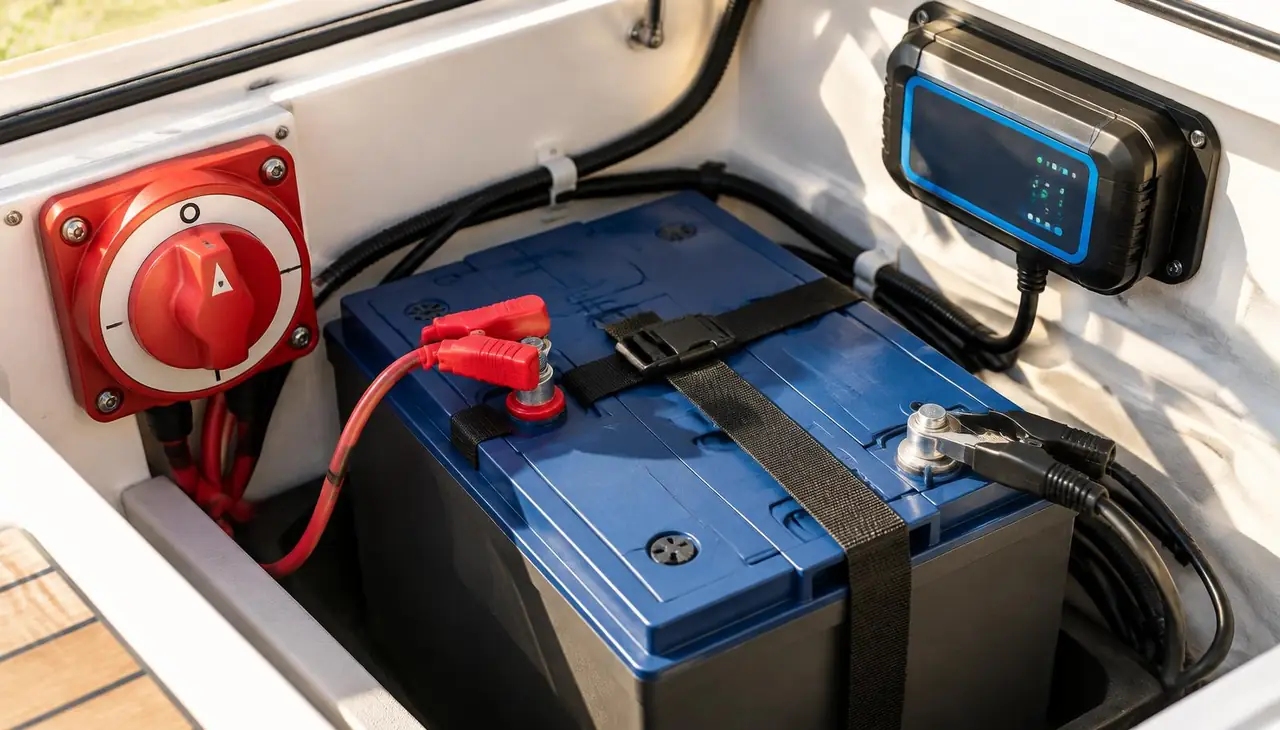
Marine batteries work hard in our part of Florida, and heat is a big part of why. Boats around Sarasota and Bradenton often sit on lifts between trips, baking under direct sun for days at a time, and that heat affects batteries whether the boat is running or not. Understanding how heat, wiring, and charging habits interact can help you get more consistent life out of your boat's batteries.
Why Heat Shortens Battery Life
Batteries generate and respond to heat through ongoing internal chemical reactions, and higher ambient temperatures speed up those reactions even when the battery is just sitting idle. A boat sitting on a lift in direct Florida sun can expose the battery compartment to significantly higher temperatures than a boat stored in shade or inside a garage. Over time, that heat exposure tends to shorten how long a battery performs well compared to the same battery kept in a cooler environment.
Battery Switches and Parasitic Draw on Lifts
A boat parked on a lift for days or weeks between uses is still connected to its electrical system unless something interrupts that connection. Small draws from bilge pumps, stereo memory, or other accessories continue pulling a tiny amount of power even when everything appears to be off. Over an extended period sitting unused, this parasitic draw can slowly drain a battery, and a battery that sits in a partially discharged state is more vulnerable to damage, especially when combined with heat.
- Use the battery switch to disconnect power when the boat will sit unused for more than a few days
- Be aware that some equipment, like bilge pumps, may need to stay connected depending on your setup
- Check battery voltage periodically during long stretches between trips
Keep Terminals Clean and Tight
Corrosion on battery terminals adds resistance to the connection, which can affect both charging and the power delivered to your systems. Salt air and humidity around our waterways make terminal corrosion a regular maintenance item rather than a rare problem. Periodically checking that terminals are clean, tight, and free of the white or greenish buildup that signals corrosion is a simple habit that protects the rest of the electrical system too.
- Inspect terminals for corrosion buildup on a regular basis
- Clean corroded terminals and confirm connections are tight
- Consider terminal protectant products designed for marine use
Charging Habits That Help
How a battery is charged matters almost as much as how it is used. A battery that is regularly left partially discharged, rather than brought back to a full charge after each outing, tends to wear down faster over time. A quality marine charger that matches your battery type helps maintain a full charge between trips without overcharging. If your boat sits for extended periods, a charger with a maintenance mode designed to hold the battery at an appropriate level, rather than one built only for a quick bulk charge, is generally a better fit.
- Recharge batteries after each outing rather than letting them sit partially discharged
- Match your charger type to your battery type
- Use a maintenance style charger for boats that sit unused for longer stretches
Signs It Is Time for a Replacement
Batteries do not usually fail without warning signs. Slower engine cranking, accessories that seem to dim or struggle under load, or a battery that will not hold a charge the way it used to are all signals worth paying attention to. In our climate, these signs can show up sooner than owners expect given how much heat the battery compartment experiences while sitting on a lift.
When to Call a Mechanic
If you are seeing inconsistent cranking, unexplained electrical issues, or a battery that drains faster than it used to even with good charging habits, it is worth having the electrical system checked. A technician can test the battery itself along with the charging system and wiring to determine whether the battery, the charger, or a wiring issue is behind the symptoms.
If your boat's batteries are not holding up the way they should, call M3 Mobile Marine at (941) 720-9558 to have the system checked.
Related service12V and 24V Electrical Repair